


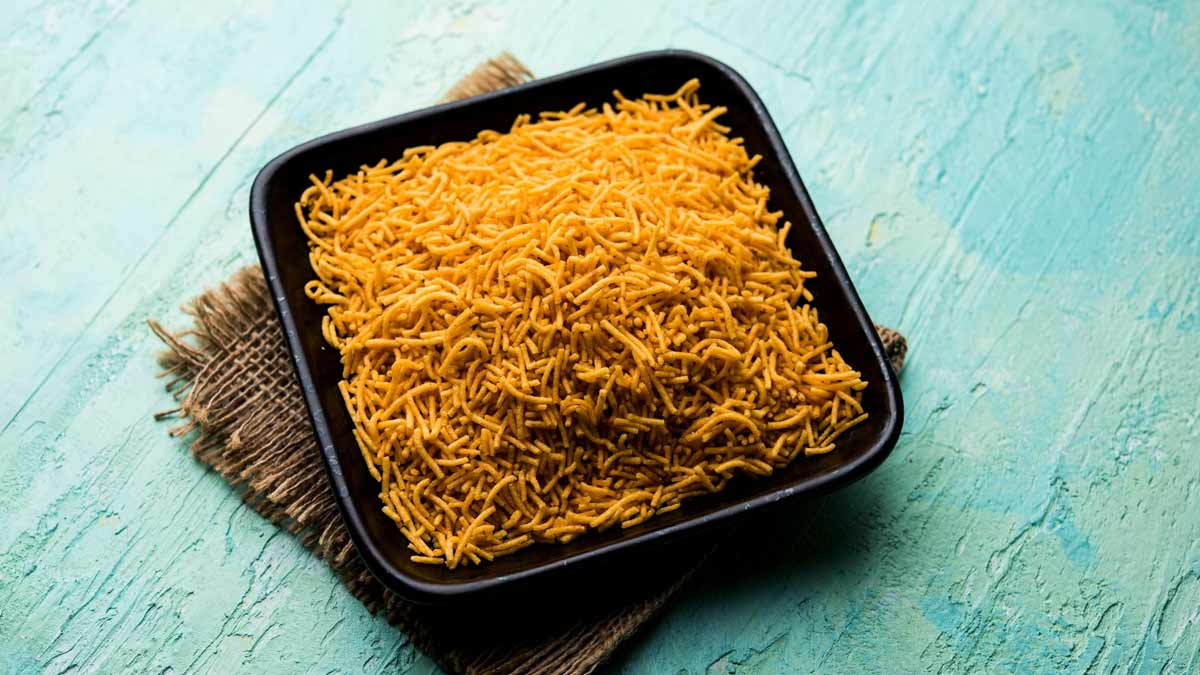
Let’s examine the main distinctions between the two, ranging from texture and flavor to regional origins and ingredients.
It’s likely that you have crunched through innumerable packets of sev and bhujia if you were raised in an Indian home. On occasion, you may have eaten them right out of the package or added crunch by scattering them over chaat or poha. They may appear to be somewhat similar at first glance because they are both thin, crispy, yellow strings. The terms are really frequently used interchangeably. However, did you realize that they aren’t the same? Deeper investigation will reveal that sev and bhujia are very distinct. Let’s examine the main distinctions between the two, ranging from texture and flavor to regional origins and ingredients.
Bhujia: What Is It?
Bhujia is a flavorful, crunchy, and spicy snack. It has a rich, robust flavor since it is created with specific spices. Bhujia is a popular food among those who enjoy strong flavors. Rajasthan is home to the most well-known kind, Bikaneri bhujia, which is so unique that it has been designated as a Geographical Indication (GI).
Who Is Sev?
Sev is crispier and lighter than bhujia. It’s excellent for giving food crunch. Sev is easy to eat and has a mild flavor. There are numerous variations of it, including laung sev, moti, barik, and ratlami. It is frequently consumed with tea or as a garnish for chaats, poha, and bhel.
Sev and Bhujia differ in the following five important ways:
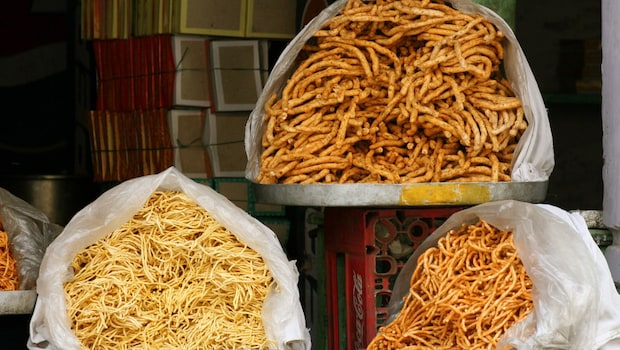
- Components
While bhujia is produced with a blend of gram flour and moth dal flour, which gives it a distinct flavor and texture, sev is usually made with gram flour.
- Profile of Spices
In contrast to bhujia, which features strong spices like pepper, ajwain, and occasionally even cloves or cinnamon, sev has a gentler flavor with simpler spices.
- The Story of Origin
Madhya Pradesh and Gujarat are the birthplaces of Sev, with Ratlam serving as a significant hub. In contrast, bhujia is a Rajasthani staple, especially from the city of Bikaner.
- Shape and Texture
Because moth dal flour is added, bhujia is finer, crispier, and more brittle than sev, which is often thicker and softer.
- Application
While bhujia is frequently consumed on its own with tea or added to snack mixes for an added kick, sev is frequently used as a topping for chaats, sandwiches, and poha.
Is it possible to substitute Bhujia and Sev in recipes?
It’s not generally advised to use sev and bhujia interchangeably in recipes, however you can try it. While sev’s milder flavor and softer texture make it a better choice for some recipes, bhujia’s strong flavor and crunchy texture may overshadow some dishes.
Are Sev and Bhujia Nutritious Snacks?
When taken in moderation, sev and bhujia can both be included in a healthy diet. Gram flour and additional additives that offer some protein and fiber are used to make them. However, because they are fried, they frequently contain a lot of calories, fat, and sodium. Instead of frying them, think about baking or roasting them to make them healthier.
Now that you know the differences between sev and bhujia, go ahead and crunch your way through your favourite foods.
Read More: Top Five Small SUVs Best Mileage 22.8

| Join Our Group For All Information And Update, Also Follow me For Latest Information | |
| Facebook Page | Click Here |
| Click Here | |
| Click Here | |